Rice Market Challenges Ahead
 04 Oct, 2023
Economic Forecast Briefing Note: Rice Market Analysis
Introduction
The global rice market faces significant challenges due to escalating food inflation in Asia, resulting in export restrictions by major rice-producing countries. This article provides an overview of the current state of the rice market, focusing on key players like India, Pakistan, Thailand, and their potential impact on the European market. Additionally, the El Niño event poses further difficulties for the rice industry.
Market Trends in Asia
India: As one of the world’s largest rice exporters, India has taken measures to address food inflation, including a 20% export tax on parboiled rice and a minimum export price of $1,200 USD/T FOB for basmati rice. These actions aim to stabilize domestic prices, compounded by adverse weather conditions affecting rice production.
Pakistan: Despite earlier market signs of decline, Pakistan has raised its minimum export prices to align with India.
Thailand: Thailand faces challenges due to delayed and insufficient monsoons, potentially reducing fragrant rice production and increasing long-grain rice prices due to high export demand. Concerns also persist regarding water reserves and spring harvests.
European Impact
Spain: Drought conditions have significantly reduced rice cultivation areas in Spain, with recent heavy rains negatively affecting yields and rice quality.
Italy: Although rice cultivation areas have decreased slightly, more normal yields are expected in 2023. This may lead to a decrease in European rice prices, particularly for rice used in risotto dishes, contingent upon market demand.
Customs Duties: Import duties on cargo rice in Europe increased from €30 to €42.50/T on January 1, 2023.
El Niño’s Impact
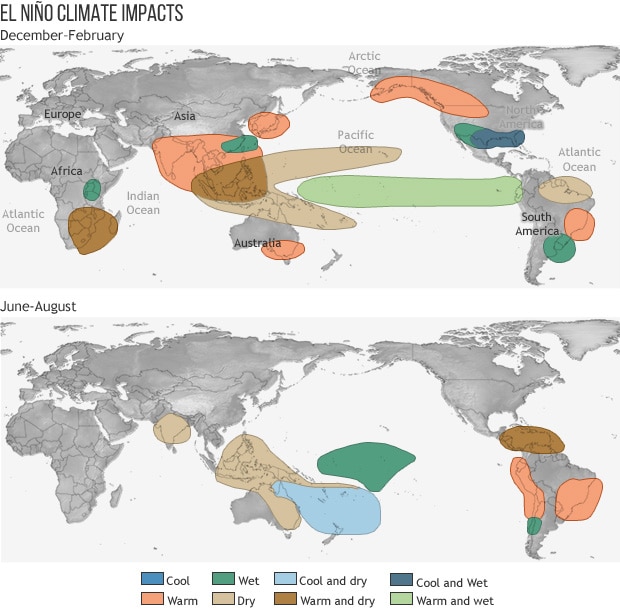
The “El Niño” event, maintaining a strong hold as we end 2023, presents additional challenges:
Weather Conditions: El Niño is anticipated to bring hotter and drier weather, negatively affecting rice production in Asia, and impacting global food security.
Price Increases: Price hikes due to production deficits have already been observed, affecting countries like Myanmar, Cambodia, and Nepal.
Vulnerability: Reduced precipitation, export restrictions, and fertilizer shortages are expected to worsen the situation in rice-producing nations, potentially leading to food shortages and higher farming costs.
Conclusion
The global rice market is facing unprecedented challenges. Political decisions made in the region will continue to reverberate globally, potentially affecting European markets. Monitoring these developments and their potential impacts is crucial for stakeholders in the rice industry.