CALL US FREE ON 0800 999 8876 OR EMAIL [email protected]
Bakerite
Please select your product requirement

Sample Page

Market Report Update: Tapioca Starch

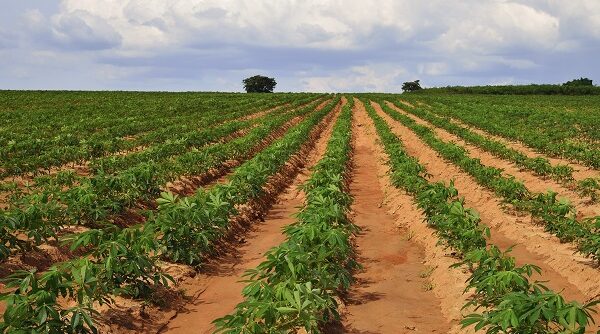
Tapioca Field

Tapioca starch prices have risen sharply since the start of 2026. Based on export data out of Thailand and Vietnam and current cassava crop forecasts, this update sets out where prices stand today, why they have climbed so far, and what the outlook is through the end of 2027.

Tapioca starch export prices out of Thailand have climbed approximately 45% since early January 2026, peaking in mid-June and holding near that level through July. Vietnam’s prices have risen by a similar amount over the same period.

What is behind the price increase?

Weather: drought conditions across key Thai growing regions have reduced root yields through the 2025/26 season. Dry conditions have persisted long enough that planted area and yield data in these provinces are now being watched closely as an early signal of how supply will develop over the rest of the year.

Disease pressure: Cassava mosaic disease and pest issues have continued to cut into harvestable output in both Thailand and Vietnam. Supply has also been patchy by region: in Vietnam, northern stocks ran low by February, and processors in the Central Highlands and Tay Ninh saw sudden price spikes as material ran short.

Planting material shortage: a shortage of healthy stem cuttings has limited replanting in Thailand, constraining next season’s supply as well as this one. That domestic shortfall was compounded in late January 2026 by tighter border controls restricting cassava imports from Laos and Cambodia, which had previously helped top up Thai processors’ supply.

Sustained demand: Thai factory processing capacity fell to around 62% in January 2026 as plants competed for scarce root, and buyer demand hasn’t eased either. China, the region’s largest export market, imported approximately 543,200 tonnes of tapioca starch in March 2026 alone for its food, fermentation, and animal-feed sectors, keeping competition for the reduced supply high even as prices climbed.

What does the future look like?

Thai industry forecasters project fresh cassava output to recover strongly in 2026, up an estimated 10–12% as La Niña-driven weather improves, before easing back again in 2027 as drier conditions are expected to return.

Prices are expected to remain above pre-2026 norms through the forecast window. That broad pattern is echoed in raw cassava root price forecasts, which are expected to ease in 2026 before firming again in 2027 as supply tightens once more.

For buyers, timing matters here. As the recovering 2026/27 crop reaches processors over the second half of the year, the easing this forecast points to should start feeding through into offer, but on the data available today, that relief looks temporary rather than permanent. Once drier conditions return in 2027, the same cassava-supply pressure that drove this year’s 45% price increase could reassert itself. That makes late 2026 the most likely window to lock in supply on better terms: waiting for prices to fall further risks missing that window rather than improving on it. Buyers who move while the market is easing, rather than after it has already turned, are best placed to secure predictable costs before tightening returns.

Market Report Update: Psyllium

Existing Market:

Currently, The market is stable, however, showing peaks randomly (5 to 7 % either side) which, we believe, will not be consistent, as till new crop arrive, there is approx. 5 to 7 weeks left. Looking at the current supply vs demand, it seems that there will be no much carryover this year. On the positive notes, we are not expecting significant variation in prices this year till new crop arrive hence recommending to buy stock up to May 2024 to eliminate stock-out situation. The current market update is given below:

Psyllium seed standard quality: INR3500 per 20 kg

Psyllium Seed Premium Quality: INR3900 per 20 kg                          

Daily arrival: 1500 bags of 75 kg seeds from farmers

Daily trade: 6500 bags (farmers + traders)

2024 Crop & Market:

Psyllium Crop 2024 is ripening in the field and is expected to start arriving in the market by mid-March 2024. Looking at the early estimate, it seems that this year the crop is significantly good in terms of quality and quantity. However, we still need to wait for 4 to 6 weeks, as this duration is so important for a seeds to develop and get mature well with pro-environmental condition, considering there will not be any surprises e.g. natural disaster, unseasonal rain and so on. We are keeping close watch on the crop development and we will be able to comment in detail after a detailed field survey, which we have planned early March. We will keep you posted accordingly with our detailed crop survey report. 

Usually, crop arrival starts slowly from mid-March and it reaches the peak from early April onwards. We usually experience the mixed seeds (carryover from previous year and fresh seeds) in early stage (mid-March) arrival. Followed by all fresh seeds during peak arrival duration which will be from April onwards and that is potentially good quality seeds. The carry over stock of 2023 will be in negligible this year. The demand from international market is so positive and raw material raw material prices also looks firm. 

Further due to the Red Sea / Suez canal issue the transit time has been also increased around 2 weeks. So please plan your requirement accordingly.  

Considering the above exiting market and forecasting details, we suggest you buy till May 2024, and hold your further buying till the new crop arrives.

Global Market Report Update: Soyabean

India’s Soyabean Production:
India’s soybean crop, which is the fifth largest in the world, is expected to be slightly lower this year due to a slump in soil moisture. According to India’s meteorological department data, India received its lowest rainfall in over a century in August, with a 36% reduction compared with the usual amount. Normally, August receives the second-highest rainfall of the monsoon months after July. India’s soybean production is expected to be 11.87 million tons in the 2023-24 season, marking a reduction of 4.73% from the previous year.

Global Soybean Production:
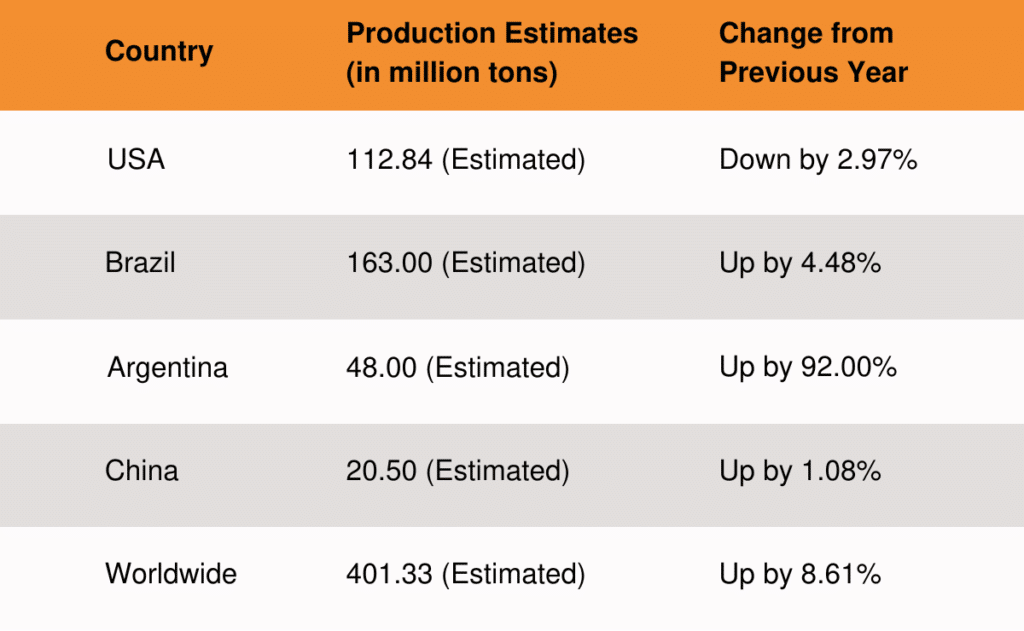
According to the latest USDA report for the 2023-24 season, the world is expected to have good supplies of soybean throughout the year. The following table shows the production estimates in million tons:

Conclusion:
Looking at the crop size, there is a likelihood of a stable price scenario in the coming months. Buyers should keep buying from now as prices at harvest are mostly at the lowest level. However, it is uncertain how much prices will adjust by the end of the year, especially with the possibility of an El Niño event that could change the game in the coming months.

Rice Market Challenges Ahead

Economic Forecast Briefing Note: Rice Market Analysis

Introduction

The global rice market faces significant challenges due to escalating food inflation in Asia, resulting in export restrictions by major rice-producing countries. This article provides an overview of the current state of the rice market, focusing on key players like India, Pakistan, Thailand, and their potential impact on the European market. Additionally, the El Niño event poses further difficulties for the rice industry.

Market Trends in Asia

India: As one of the world’s largest rice exporters, India has taken measures to address food inflation, including a 20% export tax on parboiled rice and a minimum export price of $1,200 USD/T FOB for basmati rice. These actions aim to stabilize domestic prices, compounded by adverse weather conditions affecting rice production.
Pakistan: Despite earlier market signs of decline, Pakistan has raised its minimum export prices to align with India.
Thailand: Thailand faces challenges due to delayed and insufficient monsoons, potentially reducing fragrant rice production and increasing long-grain rice prices due to high export demand. Concerns also persist regarding water reserves and spring harvests.

European Impact

Spain: Drought conditions have significantly reduced rice cultivation areas in Spain, with recent heavy rains negatively affecting yields and rice quality.
Italy: Although rice cultivation areas have decreased slightly, more normal yields are expected in 2023. This may lead to a decrease in European rice prices, particularly for rice used in risotto dishes, contingent upon market demand.
Customs Duties: Import duties on cargo rice in Europe increased from €30 to €42.50/T on January 1, 2023.

El Niño’s Impact

The “El Niño” event, maintaining a strong hold as we end 2023, presents additional challenges:

Weather Conditions: El Niño is anticipated to bring hotter and drier weather, negatively affecting rice production in Asia, and impacting global food security.
Price Increases: Price hikes due to production deficits have already been observed, affecting countries like Myanmar, Cambodia, and Nepal.
Vulnerability: Reduced precipitation, export restrictions, and fertilizer shortages are expected to worsen the situation in rice-producing nations, potentially leading to food shortages and higher farming costs.

Conclusion

The global rice market is facing unprecedented challenges. Political decisions made in the region will continue to reverberate globally, potentially affecting European markets. Monitoring these developments and their potential impacts is crucial for stakeholders in the rice industry.

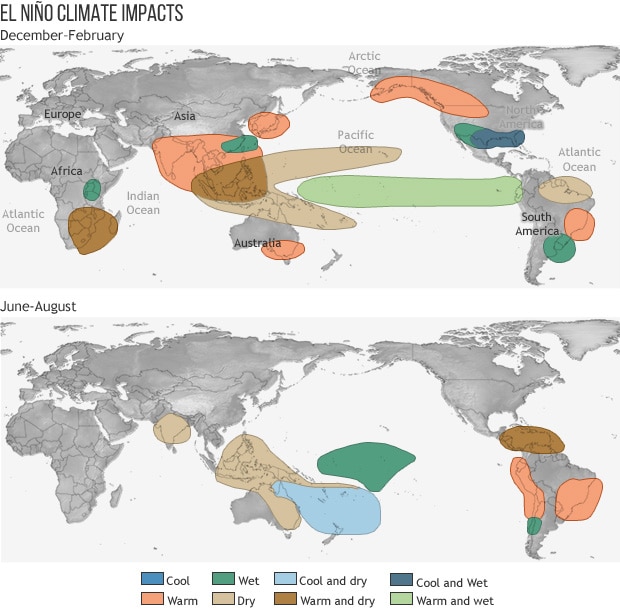
These maps show winter and summer global ENSO impacts. Source: www.climate.gov

Tapioca Crop Report – September 2023

Based on both firsthand observations and information obtained from local farmers and government sources, it is evident that this year’s crop production will be significantly lower than the previous year. The export prices have also been affected by fluctuations in currency exchange rates. This report outlines the key findings and implications of this situation

1. Crop Situation in Thailand
One of the main factors affecting tapioca production in Thailand is the significant shift in weather patterns. Climate change has led to unpredictable weather conditions, including irregular rainfall and temperature fluctuations. These variations in weather can negatively impact crop growth, affecting both the quality and quantity of the harvest. Another critical factor contributing to the decline in tapioca production is the outbreak of Cassava Mosaic Disease (CMD). CMD is a viral disease that affects cassava plants and can lead to stunted growth, reduced yields, and, in severe cases, crop failure. The outbreak of CMD has caused significant concern among Thai farmers, as it has the potential to devastate their livelihoods and disrupt the supply chain of tapioca products in the region.

2. Crop Situation in Vietnam
Vietnam, like its neighbouring country, Thailand, is also facing challenges in its agricultural sector particularly in the cultivation of tapioca. The recent crop situation in Vietnam mirrors the trends observed in Thailand. During a recent visit from our Thailand supplier to several regions in Vietnam, it was observed that the tapioca crop for this year is expected to be considerably lower than last year’s yield as is being experienced across the whole region.

3. Impact of Weather Conditions
Thailand experienced heavy rains that resulted in significant flooding in various areas, followed by a prolonged dry season characterized by hot and arid weather. These extreme weather conditions have had a profound negative impact on tapioca plantations. It is estimated that the crop yield for this year will decrease by approximately 10-15% compared to the previous year due to these unfavourable weather conditions.

4. Tapioca Root Supply Shortage
One of the key indicators of the crop situation is the scarcity of tapioca roots since the beginning of the year. Farmers are adopting a cautious approach, opting not to harvest their crops but instead preserving their tapioca plants (trees). This strategy involves retaining the tapioca tree stems to replant when favourable weather conditions return. This further emphasizes the seriousness of the crop yield reduction.

5. Long-Term Outlook
The current situation is expected to persist over the next couple of years until new tapioca varieties resistant to CMD are developed. There is a sense of hope that the ongoing El Niño event will not exacerbate the situation by causing a prolonged drought throughout the country, as forecasted. This underscores the need for continuous monitoring and adaptation to cope with changing climate patterns.

6. Price Trends
The impact of the aforementioned factors is evident in the price of native tapioca starch. Prices have been steadily increasing since the beginning of the year, primarily due to rising raw material costs and the supply shortage. It is anticipated that these price increases will continue given the supply situation explained above. Additionally, export prices have been influenced by the strength of the Baht in comparison to the US Dollar.

Conclusion
Due to the factors outlined above, the current crop situation for tapioca is very challenging. While there is optimism for the future with the development of CMD-resistant tapioca varieties, the industry should prepare for continued supply shortages and rising prices in the short term.
This report serves as a snapshot of the current situation and may require updates as new information becomes available.

Drought in Northern Italy: Rice Crop Update

The following is an update on the serious Drought Conditions in Northern Italy from our Rice Flour Producer, warning of Availability and Cost issues ahead. Everyone is suffering!

Here in Northern Italy it’s really very hot, from 35°C to 40°C, there’s no water in the rivers, no snow in the mountains, so the lack of water is a real problem, also for agriculture.

Corn is growing as the harvest is at the beginning of September, but a part is of course damaged and burned due to the drought. Regarding rice, some area close to Novara and the land of Lomellina have really few water, in Vercelli area the situation it’s better. Anyway everyone is expecting less quantity of rice this year. Prices are still very high, corn and rice increase continuously, most of all rice. Farmers are not selling the remaining raw rice as they want to earn more money so they’ll wait till the end of August, beginning of September to offer some product in the market at very high prices. Rice mills are consequently working less , and there’s few broken rice in the market, so also this one is expensive to purchase and rice flour prices remain high.

I think that for new crops prices will remain high, as it’s really a difficult period and it’s hard to work in this way. Moreover energy costs are crazy and we have to use a lot of power to run the mills 24 hours a day. So also production costs are very high.