
CALL US FREE ON 0800 999 8876 OR EMAIL [email protected]
Bakerite
Please select your product requirement

Sample Page

Tapioca Crop Report – September 2023

Based on both firsthand observations and information obtained from local farmers and government sources, it is evident that this year’s crop production will be significantly lower than the previous year. The export prices have also been affected by fluctuations in currency exchange rates. This report outlines the key findings and implications of this situation

1. Crop Situation in Thailand
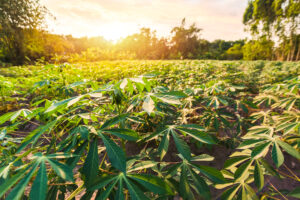
One of the main factors affecting tapioca production in Thailand is the significant shift in weather patterns. Climate change has led to unpredictable weather conditions, including irregular rainfall and temperature fluctuations. These variations in weather can negatively impact crop growth, affecting both the quality and quantity of the harvest. Another critical factor contributing to the decline in tapioca production is the outbreak of Cassava Mosaic Disease (CMD). CMD is a viral disease that affects cassava plants and can lead to stunted growth, reduced yields, and, in severe cases, crop failure. The outbreak of CMD has caused significant concern among Thai farmers, as it has the potential to devastate their livelihoods and disrupt the supply chain of tapioca products in the region.
2. Crop Situation in Vietnam
Vietnam, like its neighbouring country, Thailand, is also facing challenges in its agricultural sector particularly in the cultivation of tapioca. The recent crop situation in Vietnam mirrors the trends observed in Thailand. During a recent visit from our Thailand supplier to several regions in Vietnam, it was observed that the tapioca crop for this year is expected to be considerably lower than last year’s yield as is being experienced across the whole region.

3. Impact of Weather Conditions
Thailand experienced heavy rains that resulted in significant flooding in various areas, followed by a prolonged dry season characterized by hot and arid weather. These extreme weather conditions have had a profound negative impact on tapioca plantations. It is estimated that the crop yield for this year will decrease by approximately 10-15% compared to the previous year due to these unfavourable weather conditions.

4. Tapioca Root Supply Shortage
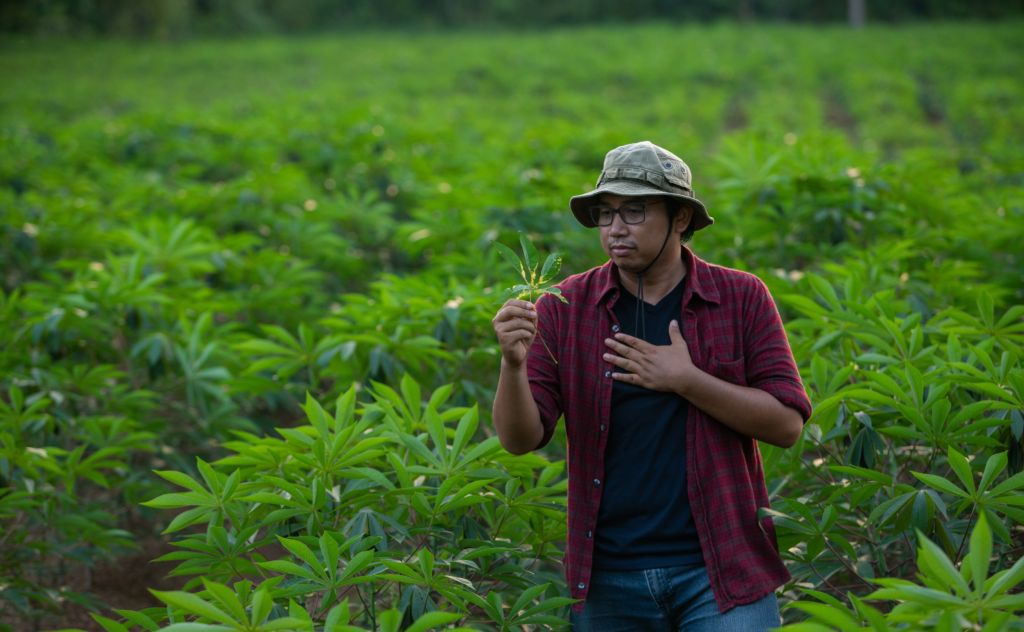
One of the key indicators of the crop situation is the scarcity of tapioca roots since the beginning of the year. Farmers are adopting a cautious approach, opting not to harvest their crops but instead preserving their tapioca plants (trees). This strategy involves retaining the tapioca tree stems to replant when favourable weather conditions return. This further emphasizes the seriousness of the crop yield reduction.
5. Long-Term Outlook
The current situation is expected to persist over the next couple of years until new tapioca varieties resistant to CMD are developed. There is a sense of hope that the ongoing El Niño event will not exacerbate the situation by causing a prolonged drought throughout the country, as forecasted. This underscores the need for continuous monitoring and adaptation to cope with changing climate patterns.

6. Price Trends
The impact of the aforementioned factors is evident in the price of native tapioca starch. Prices have been steadily increasing since the beginning of the year, primarily due to rising raw material costs and the supply shortage. It is anticipated that these price increases will continue given the supply situation explained above. Additionally, export prices have been influenced by the strength of the Baht in comparison to the US Dollar.

Conclusion
Due to the factors outlined above, the current crop situation for tapioca is very challenging. While there is optimism for the future with the development of CMD-resistant tapioca varieties, the industry should prepare for continued supply shortages and rising prices in the short term.
This report serves as a snapshot of the current situation and may require updates as new information becomes available.
Drought in Northern Italy: Rice Crop Update

The following is an update on the serious Drought Conditions in Northern Italy from our Rice Flour Producer, warning of Availability and Cost issues ahead. Everyone is suffering!

Here in Northern Italy it’s really very hot, from 35°C to 40°C, there’s no water in the rivers, no snow in the mountains, so the lack of water is a real problem, also for agriculture.

Corn is growing as the harvest is at the beginning of September, but a part is of course damaged and burned due to the drought. Regarding rice, some area close to Novara and the land of Lomellina have really few water, in Vercelli area the situation it’s better. Anyway everyone is expecting less quantity of rice this year. Prices are still very high, corn and rice increase continuously, most of all rice. Farmers are not selling the remaining raw rice as they want to earn more money so they’ll wait till the end of August, beginning of September to offer some product in the market at very high prices. Rice mills are consequently working less , and there’s few broken rice in the market, so also this one is expensive to purchase and rice flour prices remain high.

I think that for new crops prices will remain high, as it’s really a difficult period and it’s hard to work in this way. Moreover energy costs are crazy and we have to use a lot of power to run the mills 24 hours a day. So also production costs are very high.

Market Update – Canadian Flaxseed

The demand for flaxseed for use in the food industry is increasing due to its high nutritional value and growing utilisation in the production of various products, such as confectionery and bakery products, and energy bars. North America holds a major market share in the global flaxseed market due to high production volume in Canada.

High demand and increase in overseas exports from Canada have resulted in a reduced domestic supply for Canadian flaxseed, causing prices for the crop to skyrocket. The pandemic has also caused a significant increase in consumer demand for flaxseed, with lockdowns and restaurant closures increasing the prevalence of home baking.

Furthermore, flaxseed prices are rising because of a severe drought in Canada. Vast quantities of flaxseed growing areas have less than 40% of their regular moisture in the soil. This means that the yield this year is expected to be significantly lower than usual.

All this means that the average price of flax has increased 52.2% so far this year, as shown in the chart below. 

Transport/Delivery Crisis

Rapid, fast, delivery, stocked and held in the UK

The UK haulage/transport sector is going through a very difficult period, with increased demand but reduced capacity to deliver as required. The main issue seems to be a lack of available drivers.

We have experienced many delays as a company in recent weeks, and have even had trailers loaded and made ready for despatch, only for the drivers not to be available to collect the load resulting in the goods having to be put back into stock again!

We are doing all we can to continue our normal service but would request you plan ahead and allow longer lead times and take stock earlier than you would normally while we go through this difficult time, so we can ensure you don’t run out of any stock. We are also now being told our carriers can not offer a guaranteed next day service, and that they have to be confirmed at point of booking. Until further notice we are unable to guarantee any delivery date, although will do all we can to keep to our standard service and will keep in close contact.

Xinjiang China Statement

Following the recent Government recommendations regarding the Xinjiang region in China, we can confirm that we do not directly nor indirectly purchase or supply any products that are from this area.

Visit the link below to view the Government’s announcement:
https://www.gov.uk/government/news/uk-government-announces-business-measures-over-xinjiang-human-rights-abuses

Psyllium Husk

Wooden Spoon with Psyllium Seeds on dark background

Psyllium Husk has many uses as a bakery ingredient. It is an excellent source of fibre, and can hold up to 20 times its own weight in water. It is Gluten Free, and has no odour or flavour. When added to a Gluten Free mix, it forms a dough rather than a batter making it easy to form and shape into a variety of bakery products.

Benefits

  • Holds 20x its weight in water
  • Forms a dough, not a batter
  • Healthy and natural!
  • Non-GMO
  • Gluten Free
  • Clean Label

Applications

Grade NamesPsyllium Husk Powder 60 Mesh 98% PurePsyllium Husk Powder 100 Mesh 99% PurePsyllium Husk Whole 98% Pure
DescriptionWhite to off White Coloured Odourless HuskSuper White Coloured Odourless HuskWhite to off White Coloured Odourless Husk
Psyllium Mucilloid Content98% Pure99% Pure98% Pure
TasteBland Mucilaginous
Moisture10% Max
Swell VolumeMin 50 ML/GramMin 70 ML/GramMin 50 ML/Gram
Total Ash3% Max3% Max4% Max
Acid Insoluble Ash1% Max0.50% Max1% Max
Light Extraneous Matter2% Max1% Max2% Max
Total Consumable FibreAbout 88%About 90%About 88%

Psyllium husk consists of the outer flaky part of the seeds of the plant known as Plantago Ovata, or Isabgol. The production of psyllium husk is a sophisticated process of seed cleaning and dehusking. The raw seeds are cleaned and polished repeatedly, then passed through special grinding mills for husk removal. The dehusked material, consisting of husk and kernel, is sieved to remove the kernels. Pure husk is obtained by processing and removing the impurities with aspirators and blowers.

Psyllium Husk Whole and Powder is virtually tasteless and odourless and is commonly used as an additive in many high fibre breakfast cereals and supplements.

Psyllium Husk Powder makes an excellent bakery ingredient; it adds fibre (99%) and is excellent at retaining moisture – it can hold up to 20 times its own weight in water which is music to any bakers ears! Once the water absorption process is completed the mix does not break down easily when exposed to new moisture, allowing it to keep its original form.

When added to Gluten Free mixes it forms a dough rather than a batter, making it easy to form and shape into a variety of bakery products. It can be used as a cold swell product (works at normal water temperature). The ground psyllium seed husks bind moisture and help make the bread less crumbly.

Psyllium Husk can also be added to fresh fruit or flavoured drinks to improve the mouth feel, making it richer and providing a better consistency.