CALL US FREE ON 0800 999 8876 OR EMAIL [email protected]
Bakerite
Please select your product requirement

Sample Page

Tapioca Starch

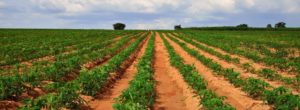
The Tapioca Root, also known as Cassava, Manioc, or Yucca, is the third most important carbohydrate in the world. Native to South America, it is a staple diet throughout the tropical and subtropical areas of South America, Africa, Asia and the Pacific Islands. Most cultures that consume the root also eat the leaves, which are a good source of protein.


Cassava or Tapioca?

Cassava (and Manioc and Yucca) are all names for the same starchy tuber grown throughout South America, Africa, and Asia. The tuber roots of the Cassava plant are referred to as Tapioca.


World Production of Cassava

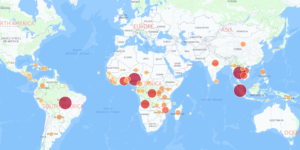
The biggest producers of Tapioca are Nigeria, Thailand, Indonesia, Brazil, Vietnam & Cambodia. Nearly all of the countries that grow Cassava are developing countries, which generally means they do not have the Quality Assurance systems in place as required by Europe. Thailand and Brazil are the leaders in this field.

Thailand only has 2 Tapioca Factories that hold BRC certification, while Vietnam has none. The BakeRite Company is a distributor for both Tapioca Factories in Thailand that have BRC.

By only dealing with Producers that have sufficient quality assurance controls in place we ensure that we have a good quality product and that the total hydrocyanic acid content of the product does not exceed the accepted level of 10mg/kg.

The Map above shows the World Distribution of Cassava crops in 2013.


Tapioca Benefits

  • Water Binding Capability
  • Swelling Power
  • Adds Structure
  • Chewy and Crisp Texture
  • Speeds Up Rising Process
  • Lightens Product
  • Aids in Browning


Masa Flour

The BakeRite Company provides a wide range of masa flours for so called “Tex-Mex” applications: tortilla chips for dipping or ethnic snacks, tacos, soft tortillas (fajitas), corn chips, etc.

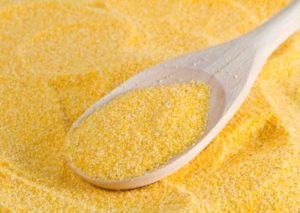
Masa Flour is made from cooked corn kernels that are ground into flour. Masa Flour is then mixed with water and pressed and shaped into the desired size and thickness before being baked or fried.

Product Name Suggested Applications
Masa Flour Large Tacos and Tortilla Chips (Crunchy Texture)
Masa Flour Tortilla Chips (Crispy Texture)
Masa Flour Fine Soft Corn Tortilla (Flexibility)
Masa Flour Extra Fine Extrusion (Lime Taste, Crispy Texture)


Most Masa Flours that are manufactured using traditional processes are obtained by nixtamalisation, a process that requires large amounts of water and energy. Our Masa is produced by using a patented hydrothermic process that achieves similar products, while at the same time improving the regularity, shelf life and environmental impact of the Masa Flour.


El Niño 2015-2016


So what is El Niño?

El Niño is the name given to an irregularly occurring weather phenomenon of the South American Coast in the Pacific. In this area the trade winds typically blow from east to west, but when they weaken, the sea surface temperatures start to rise, setting off a chain of atmospheric impacts. El Niño usual occurs every two to seven years, and its power can vary between strong and weak. Strong El Niños can cause a huge disruption in the weather patterns around the world, bringing drought to the west parts of the Pacific, such as Australia, South Asia and Africa, and heavy rains and flooding to the other side of the Pacific, in countries such as Argentina and Peru. In the UK, stronger El Niños bring freezing winters, and heavy snow and rainfall.

Why is this year’s El Niño such a big thing?

Well first there is the fact scientists predicted a big El Niño for 2014-15, but it kept defying predictions and not showing up. Finally, after several false alarms, in March scientists found the beginnings of a weak El Niño in the Pacific. They didn’t believe it would amount to anything big, instead predicted that it would peter out by October or November. Instead it has kept on getting bigger and bigger.

The El Niño in 1997-1998 ended up causing an estimated $35 billion (around £23 billion) in destruction, and around 23,000 deaths worldwide. The highest sea surface temperatures in 1997 was +2.75ºC above average. This time it has surpassed +3ºC and could still rise a little higher.

Sea Levels El Niño

(NASA/JPL)

El Niño is already affecting the weather globally. The average number of cyclones in the west Pacific per season is two, but so far this season there has been seven. It has triggered longer droughts in Indonesia, allowing the man-made peatland fires to spiral out of control, creating a toxic haze that has spread as far as Singapore.

And this is just the start of it. El Niño normally brings extra dry weather to Australia, that reduces crop yields and increases the risk of wildfires. The drier, hotter weather also effects crop yields in South Asian countries such as India. On the other side of the coin, El Niño can bring destructive flooding and mudslides to countries such as Peru, and to a lesser extent the United States. The biggest problem though is that – like snowflakes – no two El Niños are the same. They all unfold differently, so there is no way to accurately predict what impact an El Niño will have.

How is this going to effect crops worldwide?

As already mentioned, this El Niño will have far reaching global effects. This means that crops all over the world will be effected. Some will be effected in a positive way, but many others in a negative way. Some areas of the World will have record yields because of the change from the normal weather patterns, while in other parts of the World yields will fall dramatically. Price increases are predicted for (among others) Sugar, Wheat, Maize, Cocoa, Rice, but the prices for Soyabeans and Coffee are expected to fall. Changes in the Supply/Demand of these products in turn effects the prices and availability of alternative products. World food prices rose in September for the first time in eighteen months, but the full impact wont be known for several months yet. For instance Thailand is forecasting rice production will be down by 15-20%!

Cassava Flour

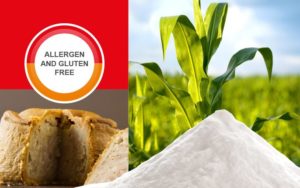
Our Cassava Flour delivers baking performance characteristics that closely mimic the structure, texture, and taste of numerous wheat-based products with a single ingredient. This effectively eliminates the need for complex formulations of flours, starches and hydrocolloids commonly used in gluten free products. Plus, it enables simplified formulation, production and inventories, and simpler, more consumer-friendly labels…

Benefits

  • 1:1 replacement for Wheat Flour in many applications
  • Healthy and natural!
  • High in Fibre (7%)
  • Enhanced functional properties
  • Non-GMO
  • Non Allergenic
  • Gluten Free
  • Clean Label


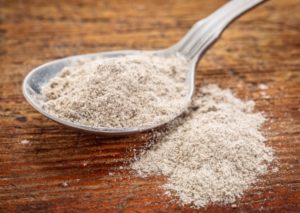
Unlike most Cassava Flours, our Cassava Flour is not hand peeled and neither is it sun dried. This ensures that our Cassava Flour is of the highest quality available. It is processed by design in a very specific process (patent pending) to manage the quality of the starch content and particle size distributions and retain relatively high fibre content. Our Cassava Flour is basically Tapioca Starch but with the fibre, approximately 7% of the flour. The presence of this amount of fibre enhances both the nutritional and functional value of the flour. This is possible since the process to manufacture the cassava is different from the process for tapioca starch. Also, while tapioca starch is entirely native starch, a specified percentage of the tapioca starch present in premium cassava flour is gelatinized.

The starch in cassava flour has favourable extrusion properties such as low gelatinization temperature, clarity, low tendency to retrograde, bland taste and high viscosity. The cassava flour itself, with its partial gelatinization, has a high water binding capacity and high degree of expansion under optimal extrusion conditions. Cassava Starch-based products exhibit light colour, smooth surface and closed structure. Research demonstrates that it extrudes as well as corn or rice.